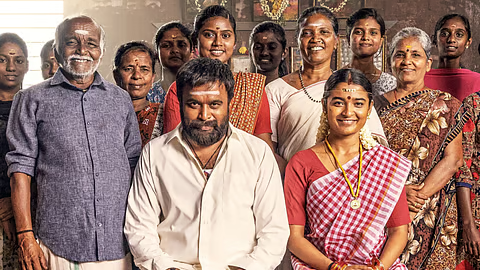
Released on 13 February 2026, My Lord has quickly drawn attention for its rooted storytelling and socially relevant theme. Directed by Raju Murugan, the Tamil film explores how a bureaucratic error can destroy lives, while exposing deeper layers of corruption and exploitation within the system. With a narrative inspired by real-world incidents, the film connects strongly with audiences looking for meaningful cinema.
My Lord (2026) Movie Overview
| Category | Details |
|---|---|
| Title | My Lord |
| Release Date | 13 February 2026 |
| Language | Tamil |
| Genre | Political Satire, Drama, Thriller |
| Director | Raju Murugan |
| Lead Cast | M. Sasikumar, Chaithra J Achar |
| Music | Sean Roldan |
| Production | Olympia Films |
| Distributor | 2D Entertainment |
| Runtime | Approx. 149 minutes |
| OTT Release | 20 March 2026 |
Storyline Focuses on Identity Loss and Survival
The core of My Lord revolves around Muthusirpi and his wife Suseela, a simple couple from Kovilpatti whose lives collapse when official records declare them dead. What begins as a shocking administrative mistake soon unfolds into a disturbing chain of events involving political pressure, illegal activities, and systemic negligence.
As they struggle to prove their existence, the couple faces social rejection and legal obstacles. Meanwhile, a parallel narrative involving a powerful minister in urgent need of a kidney transplant gradually connects to their story, revealing how vulnerable citizens often become victims of larger conspiracies.
Performances That Keep the Story Grounded
M. Sasikumar delivers a restrained yet powerful performance, portraying a man caught in an unimaginable situation with honesty and depth. His expressions and body language effectively communicate the emotional toll of losing one’s identity in official records.
Chaithra J Achar complements him well, bringing sensitivity and strength to her character. Her performance adds emotional balance to the narrative. Supporting actors like Guru Somasundaram and Asha Sharath further enhance the film by representing different layers of authority and conflict within the system.
Direction Blends Satire with Reality
Raju Murugan uses his storytelling style to merge satire with serious commentary. Instead of presenting the issue in a heavy tone throughout, he introduces moments of irony that highlight the absurdity of bureaucratic failures. At the same time, the film never loses sight of its emotional core.
The director carefully builds tension through realistic situations rather than exaggerated drama. As a result, the film feels authentic and relatable, especially for viewers familiar with administrative challenges in everyday life.
Music and Technical Aspects Add Depth
Sean Roldan’s music plays a crucial role in shaping the film’s mood. The songs blend naturally into the narrative, while the background score strengthens emotional and suspenseful moments. The music never distracts from the story, which helps maintain narrative focus.
Cinematography captures the contrast between rural life and political environments effectively. Clean visuals and thoughtful framing support the storytelling. Editing ensures a smooth flow between parallel storylines, keeping the audience engaged throughout the film’s runtime.
Critical Reception Reflects Mixed Yet Positive Response
Critics have responded with a mix of appreciation and constructive criticism. Many reviews highlight the film’s strong subject and its attempt to address real issues such as corruption and healthcare inequality. However, some critics note that certain portions could have explored emotional depth more consistently.
Despite these observations, the film has gained steady audience support. Viewers have praised its relevance and sincerity, especially after its OTT release on 20 March 2026, which expanded its reach beyond theatres.
Box Office Performance and Growing Interest
The film opened with modest earnings at the box office, collecting around ₹35 lakh on its first day. However, positive word-of-mouth helped maintain interest over time. Content-driven films like My Lord often build momentum gradually, and this film follows a similar pattern.
Industry discussions around the film have focused on its bold theme and realistic approach. It has also contributed to ongoing conversations about the importance of socially conscious storytelling in regional cinema.
Why My Lord Connects With Today’s Audience
In an environment where commercial films dominate, My Lord offers a refreshing shift by focusing on real-life issues. It highlights how fragile identity can become within flawed systems and encourages viewers to reflect on the importance of accountability.
Moreover, the film avoids unnecessary spectacle and instead relies on storytelling, performances, and relevance. This approach makes it stand out among recent releases and ensures that it remains a topic of discussion among audiences who value meaningful cinema.